Tampilkan postingan dengan label England. Tampilkan semua postingan

Jumat, 05 Juli 2013

6 July 2007 - He Should Have Listened To Thomas Wolfe

On 6 July 2007, Manchester City confirmed former England boss Sven-Göran Eriksson as their new manager in a three-year deal worth a reported £9M. But he lasted less than a year in the position.

Eriksson had previously managed several clubs in Sweden, Portugal, and Italy, winning the UEFA Cup with Göteborg, then claiming three league titles with Benfica while also taking them to the European Cup and UEFA Cup finals. He returned to the UEFA Cup final with Lazio, where he won a Serie A title and the Cup Winners' Cup. After Lazio, he managed the English national team from 2001 to 2006.

Upon his departure from the England job, he took a year off, then returned to management when Manchester City came calling, making him their first non-British manager. Owner Thaksin Shinawatra gave him a generous transfer budget, which Eriksson used to sign several players, including Rolando Bianchi, Vedran Ćorluka, and Martin Petrov.

His time there got off to a strong start, with the Blues jumping to the top of table early, but a mid-season slump saw them fall to seventh in January on the back of a string of poor results. By spring, Shinawatra announced his intention to sack Eriksson, which he eventually did that July, despite a groundswell of support for the Swede among City fans.

Eriksson went on to make a series of short stops as manager of Mexico, Cote d'Ivoire, and Leicester City, and is currently managing Guangzhou R&F in China.


Kamis, 04 Juli 2013

5 July 2012 - The Times They Are A-Changin'

On 5 July 2012, the International Football Association Board, responsible for the Laws of the Game, finally approved the use of goal-line technology, reversing years of opposition.

According to the Laws of the Game, a goal is counted only when the ball passes completely over the goal line. But the fallibility of referees means that disputed goals have long been a staple of football, even reaching to the highest level. In 1966, England won the World Cup over West Germany 4-2, with their third goal still stirring controversy over whether it should have been allowed.

To address the problem, calls for the use of goal-line technology started in the 2000s, but FIFA resisted the pressure, with President Sepp Blatter saying as late as 2010 that it would be too expensive and would slow down match play.

But high-profile incidents continued to stoke public support, including a disallowed English goal against Germany in the 2010 World Cup that was far over the line (pictured) and another by Ukraine against England at Euro 2012.

Then, in July 2012, the IFAB--which consists of FIFA and the FAs of England, Scotland, Wales, and Northern Ireland--decided to allow the use of goal-line technology, starting with the 2012 Club World Cup and the 2013 Confederations Cup (although neither tournament presented an opportunity to review a decision whether to allow a goal).

At the same meeting, IFAB voted to allow women to wear headscarves while playing, reversing a rule against religious statements that had been enforced since 2007, and also voted to allow a fifth referee at matches.

Selasa, 18 Juni 2013

19 June 2012 - The Controversy That Never Ends

On 19 June 2012, England beat Ukraine in their last group stage match of the Euros, but not without a little goal-line controversy.

They started the day separated by a single point in the Group D table. England were on top with four points, while France and Ukraine were behind them on three points each and Sweden were at the bottom with no points at all. As the top two teams advanced, everybody was still in the mix.

Playing at the Donbass Arena in Donetsk, Ukraine had the support of a partisan home crowd, but England quieted them somewhat after Wayne Rooney's 48th-minute header gave the Three Lions a 1-0 lead. Their voice returned in force in the 62nd minute, however, when the referee refused to award a goal for Marko Dević. The striker's high arcing shot was cleared by a scrambling John Terry, but replays showed that the ball crossed the line before Terry got to it. The match ended 1-0.

Afterward, Ukraine manager Oleg Blokhin was so angry that he invited one reporter to step outside for what he called "a man conversation." Dević expressed disappointment with the non-goal, suggesting a 1-1 draw with more than 25 minutes to go could have drastically altered the outcome. As it stood, however, England and France advanced, though both were eliminated in the quarterfinals.

In addition to eliminating Ukraine, the loss to England was also the last international match for their captain, Andriy Shevchenko.

Selasa, 11 Juni 2013

12 June 2010 - Dempsey Has To Get A Little Credit For Taking The Shot, Right?

On 12 June 2010, a highly-anticipated World Cup meeting between the US and England ended as a draw after a shocking error by one of the goalkeepers.

It was the first match of the tournament in Group C, which also included Algeria and Slovenia. England were heavy favorites, having come through UEFA qualification with ease by winning nine of their ten matches. The United States cut it a little closer, winning six and losing two of their ten games, but were still the top finisher in CONCACAF.

They met at the Royal Bafokeng Stadium in Rustenburg, where a vuvuzela-fueled crowd of almost 39,000 gathered for the occasion. England quickly took the lead with a 4th-minute goal from captain Steven Gerrard, who received the ball at the top of the penalty area, beat one defender, then slotted it home past keeper Tim Howard.

But their dream start was spoiled just before the break. In the 40th minute, US midfielder Clint Dempsey took a speculative left-footed shot from 25 yards out. England keeper Robert Green was well-placed to stop the low ball and appeared ready to cradle it up into his arms when it slipped by him to his right and rolled over the line. The English press dubbed the howler "the Hand of Clod."

England controlled most of the second half, but could not beat Howard and the game ended as a 1-1 draw. The US and England went on to finish first and second in the group, respectively, after a win and draw in their other two matches, then both were eliminated in the first knockout round.

Minggu, 09 Juni 2013

10 June 1984 - Barnes Blows By Brazil

On 10 June 1984, England got a rare victory over Brazil thanks in part to a memorable strike from winger John Barnes.

The two teams had played twelve times previously. England won the first game, a 4-2 victory in 1956, but proceeded to lose seven and draw four of the next eleven. So expectations were not high when manager Bobby Robson took his team down to Rio de Janeiro for a friendly.

The Maracaña was only about a quarter full for the match, but those in attendance were rewarded with one of the English national team's most celebrated goals. In the 44th minute, Barnes received the ball deep in the midfield, sprinted his way through five defenders with a weaving run, then side-footed the ball past the keeper from just outside the eight-yard box.

The match ended 0-2 after Mark Hateley doubled the lead in the 64th minute, but it is remembered primarily for Barnes' goal. It was Brazil's first defeat in the Maracaña in twenty years and remains England's only victory there.

Jumat, 31 Mei 2013

1 June 1909 - The Three Lions Take Ten

On 1 June 1909, England won their record 10th consecutive match, beating Austria 1-8 in Vienna. Even more impressively, it came just one day after their ninth win.

Coincidentally, their winning streak started with a victory over Austria almost one year earlier. After beating them 1-6 on 6 June 1908, they went on to defeat them again two days later, 1-11, then followed that with wins over Hungary, Bohemia, Ireland, Wales, and Scotland. They returned to Hungary in 1909 to record two more wins, with the second coming on 31 June, then traveled to Vienna to play Austria the following day.

Captain Vivian Woodward (pictured), who had scored four against Hungary the day before, continued his run of form, putting England up against Austria in the third minute. He went on to score twice more to complete his hat-trick and bring his two-day total to seven. He was joined on the scoresheet by Harold Halse and George Holley, who got two each, and Ben Warren, with one.

Austria's lone goal was a second-half penalty scored by Leopold Neubauer.

The winning streak stopped there, as England drew 1-1 with Ireland in their next match, played on 12 February 1910.

Selasa, 14 Mei 2013

15 May 1929 - The New World Order Begins Now

On 15 May 1929, England suffered their first defeat to a team from outside the British Isles, losing to Spain 4-3 in Madrid.

Since their first official international in 1872, England spent the next 36 years playing only Scotland, Ireland, and Wales. That changed in June 1908, when they played a pair of matches against Austria, winning 6-1 and 11-1. They followed that with another 20 matches against Continental competition and won all but one, a 2-2 draw with Belgium in November 1923.

Spain, meanwhile, played their first match in 1920 and struggled for the first few years. But in the months leading up to their meeting with England, they had notched a pair of impressive victories, beating Portugal 5-0 and France 8-1.

The two teams met in Madrid for the friendly, where England looked likely to continue their dominance, taking a 2-0 lead with both goals coming from West Brom's Joe Carter (19', 22'). Spain, however, powered back to level with strikes from Gaspar Rubio and Jaime Lazcano (reports conflict as to the timing of those goals).

England reclaimed the lead through Joe Bradford, but Lazcano (pictured) again equalized just a few minutes from the final whistle, prompting a mini pitch invasion by the home supporters. Then one minute later, amateur Severino Goiburu put Spain ahead for the first time and they held the lead for the 4-3 victory.


Kamis, 09 Mei 2013

10 May 1930 - The Beginning Of A Beautiful Rivalry

On 10 May 1930, England and Germany met for the first time in a full international, playing to a 3-3 draw in Berlin.

Unofficial representative teams for the two countries played twice in 1899 with England dominating both matches, 13-2 and 10-2. Shortly afterward, England played two matches against combined German and Austrian teams and won both, 6-0 and 7-0.

But their trip to Berlin in 1930 was their first meeting since the establishment of an official German team in 1908. The game looked likely to follow the pattern of those earlier meetings when England went up 0-1 with an 8th-minute goal from Joe Bradford, but Germany's Richard Hofmann (pictured) brought the hosts level in the 21st minute.

The two traded goals again as Bradford put England back in front in the the 31st minute and Hofmann scored another equalizer eighteen minutes later. He then completed his hat-trick in the 60th minute to give Germany the lead. They held it for twenty minutes until David Jack found the net to finish the game 3-3.

Since then, the two teams have formed a fierce rivalry, including England's famously controversial win over Germany in the final of the 1966 World Cup.

Rabu, 27 Maret 2013

28 March 2001 - The Magnificent Manchester Seven

On 28 March 2001, England beat Albania in a World Cup qualifier with almost half their team coming from one club--Manchester United.

It was only the fourth qualifier for the two teams, who were both off to a difficult start. England had four points with a win, loss, and draw, while Albania were one point back after two losses and a win. They met at the Qemal Stafa Stadium in the Albanian capital of Tirana where England fielded their Manchester-based squad.

Five members of the starting eleven--Gary Neville, Nicky Butt, David Beckham, Paul Scholes, and Andy Cole--were from Manchester United, the defending Premier League champions. Additionally, Red Devils Wes Brown and Teddy Sheringham entered as second-half substitutes, taking the club's total to seven. That matched the previous record for any one club, set by Arsenal in a November 1934 friendly against Italy (though all seven Gunners started that match).

The line-up worked against Albania, with both Scholes (86') and Cole (95') scoring in England's 1-3 win (their other goal came from Liverpool's Michael Owen in the 74th minute, while Altin Rraklli scored for Albania in the 93rd minute).

Senin, 04 Maret 2013

5 March 1870 - The First International (Sort Of)

On 5 March 1870, London hosted the world's first international match, with an English team facing a group of London-based Scottish players. It ended in a 1-1 draw.

C.W. Alcock of Old Harrovians--FA Secretary and later founder of the FA Cup--organized the match as the first of a series of five showcases between the two countries and captained the English side. The Scottish eleven was chosen by Arthur Kinnaird and  captain James Kirkpatrick and also included Old Etonians' William Gladstone, whose father later became Prime Minister.

The teams met at the Oval, muddied from rain, and played through a scoreless first half. After the break, they switched sides, which a post-match report described as a newly-implemented rule. Late in the second half, Alcock moved his goalkeeper up the field, leaving an opening for Scotland's Robert Crawford to score the opening goal in the 75th minute. But Alfred Baker found the net for England in the 89th minute to earn a 1-1 draw.

Four more representative matches followed between November 1870 and February 1872, ending in one more draw and three wins for England. But because the Scottish teams for all five matches were drawn exclusively from London, FIFA does not recognize them as official internationals.

Jumat, 22 Februari 2013

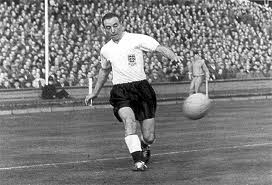
23 February 2000 - The Late Great Stanley Matthews

On 23 February 2000, Stanley Matthews, winner of the first Ballon d'Or, passed away at the age of 85.

A winger who is widely considered one of the greatest players in football history, Matthews acquired a long list of accomplishments over the course of his 33-year career, which he spent with only two clubs, Stoke City (1932-47, 1961-65) and Blackpool (1947-61). In all, he made a total of 783 appearances and scored 80 goals. But he won only one major trophy, claiming the 1953 FA Cup with Blackpool with an outstanding performance that led the game being called "the Matthews Final."

He came close twice before, reaching the FA Cup Final with Blackpool in 1948 and 1951, and also finished as league runners-up in 1956, the year he won the inaugural Ballon d'Or as Europe's greatest player. The following year, he was made a Commander of the British Empire, becoming the first (and so far only) English footballer to be knighted while still an active player.

Matthews also starred at the international level, making 54 England appearances and winning nine British Home Championships (three of which were shared titles).

His dedication to fitness and training sustained his career so that, at 50, he became the oldest player to appear in the English top flight. He is also the oldest person ever to play for England, making his last appearance at the age of 42 years, 104 days.

Upon his death in 2000, testimonials flew in from all around the world, including comments from Pelé, who said that Matthews "taught us the way football should be played" and Berti Vogts, who said "All over the world, he is regarded as a true football genius."


Kamis, 14 Februari 2013

15 February 1995 - The Lansdowne Road Riot

On 15 February 1995, a riot erupted at a friendly between Ireland and England in Dublin. A subsequent report laid the blame on English supporters and Irish authorities.

The supporters in question were members of Combat 18, an English neo-Nazi white supremacist group with a history of violence including football hooliganism.  They wasted little time in turning the friendly ugly, chanting "sieg heil" and giving Nazi salutes during the playing of the national anthems.

After a disallowed English goal, the away supporters in the higher stands ripped up benches and threw them down onto the home fans in the lower stands, prompting the referee to halt the game and send the teams off the pitch. Ireland manager Jack Charlton, a former English international, left to chants of "Judas."

The violence escalated, with rioting in the stands as the referee decided to cancel the remainder of the match. Most fans were evacuated, but those that remained clashed with police. A total of twenty people were injured.

Afterward, an inquiry found the English supporters, and Combat 18 in particular, responsible for the outbreak of violence. But the Irish authorities also shared some of the blame. They had been alerted before the match to the presence of Combat 18, but failed to take action (and even declined assistance offered by their English counterparts).


Kamis, 07 Februari 2013

8 February 2012 - A T'riffic Result For 'Arry

On 8 February 2012, Tottenham Hotspur manager Harry Redknapp was acquitted of tax evasion charges. The decision cleared the last roadblock for him to take over as England manager, but it didn't happen.

The charges stemmed from Redknapp's time at Portsmouth. In 2002, the club sold striker Peter Crouch to Aston Villa, triggering a fee due to Redknapp in his position as manager. According to prosecutors, club owner Milan Mandaric deposited a portion of the fee, amounting to around £200,000, into an account held by Redknapp in Monaco, thus avoiding taxes in the UK. Redknapp and Mandaric admitted to the deposit, but claimed it was an investment and not a fee related to the Crouch sale.

Highlights of the two-week trial included the revelation that Redknapp had named the Monaco account after his dog Rosie and his claim that he has never used a computer or sent an email, fax, or text.

The jury ultimately found both men not guilty, relying in part on the defense's argument that, for men who deal in substantial sums, the amount involved was too small to justify such efforts to avoid the payment of taxes.

During the trial, Redknapp was considered by many to be the favorite to replace Fabio Capello as England manager. But although Capello resigned on the same day as Redknapp's acquittal, the FA opted instead for West Brom manager Roy Hodgson.

Redknapp ended up leaving Spurs later that year and is now the manager at Queens Park Rangers.

Sabtu, 29 Desember 2012

30 December 1999 - Forgotten No More

On 30 December 1999, the British government finally decorated the "forgotten five" from England's World Cup-winning team, awarding them all MBEs.

Over the years following England's win over West Germany in the 1966 World Cup Final, most of the players from that match, along with manager Alf Ramsey, received official recognition from the British government, starting in 1967 with Ramsey's knighthood and captain Bobby Moore becoming an Officer of the Order of the British Empire (OBE).

Bobby Charlton received his OBE in 1969 (then became a Commander of the Order (CBE) in 1974 and received a knighthood in 1994), followed by OBEs for Gordon Banks in 1970 and Jack Charlton in 1974. In 1978, Martin Peters became a Member of the Order (MBE), as did Geoff Hurst in 1979 (Hurst was later knighted in 1998).

By 1999, however, five players from the 1966 final--Nobby Stiles, Alan Ball, Roger Hunt, Ray Wilson, and George Cohen--had not been honored, even though all of them but Ball had appeared in every match of the tournament (Ball missed the last two games in the group stage), and Hunt had scored three goals. But thanks to a push driven in part by the football media, those omissions were corrected at the end of 1999, with all five being made Members of the Order.


Kamis, 15 November 2012

16 November 1974 - All Hail The Ginger Prince

On 16 November 1974, Manchester United midfielder Paul Scholes was born in Salford. Currently in his 20th season at Old Trafford, he has made over 700 appearances for the club.

He joined United as a youth player in 1991, then joined the first team for the 1993-94 season, but did not appear in a competitive match until the following season. By September 1995, he had become a regular fixture in the starting XI, helping them to a league and FA Cup Double.

More honors followed, including a staggering nine additional league titles, two more FA Cups, and two Champions League trophies. Along the way, he built a reputation as one of the best midfielders of his generation, earning plaudits from opposing players and coaches such as Barcelona midfielder Xavi, who has called Scholes the best midfielder he's seen in the past 20 years.

Scholes earned his first cap for England in 1997 and made a total of 66 appearances before his international retirement in 2004.

He retired from United in May 2011 and took up a coaching role with the club, but was later convinced to change his mind at the urging of manager Alex Ferguson and returned to the pitch in January 2012. He recently signed a contract extension that will keep him at Old Trafford until 2013.


Selasa, 09 Oktober 2012

10 October 1966 - O Captain, My Captain

On 10 October 1966, Arsenal defender Tony Adams was born in Romford, England. He went on to become the team's most successful captain and also skippered the England national team.

He spent his entire career at Arsenal, joining them as a youth player in 1980 and remaining there until his retirement in 2002. In all, he made a total of 672 appearances for them across all competitions. He received the captain's armband from manager George Graham in January 1988 and kept it for the next fourteen years.

During that time, he led Arsenal to a collection of silverware that included the league title in 1989 and 1991, the 1993 FA Cup, and the 1994 Cup Winners' Cup. Then, in 1998, he guided them to a league and FA Cup Double, a feat they repeated in 2002.

Adams also made 66 appearances for England between 1987 and 2000 and captained the team to the semifinals in Euro 96.

Kamis, 06 September 2012

7 September 1977 - The End Of Callaghan's Capless Gap

On 7 September 1977, Liverpool midfielder Ian Callaghan made his third England appearance--a record 11 years and 49 days after his previous one.

A Liverpool player since the start of his professional career in 1960, Callaghan (pictured at far left) earned his first England cap at he age of 24 in a June 1966 friendly against Finland (England won 3-0). His second came the following month in the World Cup, as England beat France 2-0 in the group stage. It was his only appearances of the tournament, which England went on to win. Although his failure to take part in the final meant that he did not receive a winner's medal at the time, he eventually received one in 2009, along with all of the other squad members.

Despite his perfect record, he then went over a decade without playing for the national team. He continued to star for Liverpool, however, winning a total of five league titles, two FA Cups, two UEFA Cups, and two European Cups between 1964 and 1978.

In 1977, after missing England's previous 108 games, he returned to the national team for a friendly against Switzerland, which ended as a scoreless draw. The gap of 11 years and 49 days between caps remains an England record.

He made a fourth and final appearance the following month in a 2-0 win over Luxembourg.

Selasa, 03 Juli 2012

4 July 1990 - England Pays The Penalty Against West Germany

On 4 July 1990, England suffered a tearful exit from the World Cup with two missed penalties against West Germany in a semifinal shootout.

Playing before a crowd of 62,628 at Turin's Stadio delle Alpi, West Germany took a second-half lead with a goal from left back Andreas Brehme (60'), but England forward Gary Lineker scored an 80th-minute equalizer to send the match into extra time. 

The Three Lions had already had their share of late heroics, including extra-time victories over Belgium and Cameroon in their two previous matches, but they could not find one against West Germany. With neither team scoring in the extra period, the match went to penalties.

After both sides scored on their first three attempts, left back Stuart Pearce sent a low ball down the middle, where it was saved by German keeper Bodo Illgner. Olaf Thon scored to put West Germany up 4-2, then midfielder Chris Waddle stepped up to the spot for England and sent his shot over the bar to end the shootout.

Despite the dramatic finish, the match is widely remembered for the booking of England midfielder Paul Gascoigne (pictured) in the 99th minute. He had received an earlier yellow card in the match against Belgium, so the caution against West Germany meant that he would miss the Final if England advanced. The television cameras showed him visibly distraught with tears in his eyes, which became an iconic image of the tournament.

West Germany went on to win the Final against Argentina to claim their third World Cup trophy.


Minggu, 01 Juli 2012

2 July 2006 - Beckham Hands In The Armband

On 2 July 2006, one day after England's World Cup elimination by Portugal, David Beckham stepped down as team captain.

England had reached the quarterfinals before falling to Portugal on penalties. Beckham missed much of the match, having been forced to the bench in the 52nd minute due to injury. He was tearful at his press conference the next day to announce his resignation of the arm band, but expressed his intent to remain with the team.

The match against Portugal was his 94th cap. He first captained England in 2000 under caretaker manager Peter Taylor and held on to the armband for almost six years. In that time, he experienced several personal high points, including a dramatic late equalizer against Greece to qualify England for the 2002 World Cup and a penalty winner against Argentina to reach the quarterfinals of that tournament. But he also suffered through some lows, such as a missed penalty in a Euro 2004 loss to Portugal and an ejection against Austria in a qualifier for the 2006 World Cup that made him the first player to receive two red cards for England.

After initially being dropped by new manager Steve McClaren after the 2006 World Cup, Beckham returned to the national team in 2007 and eventually extended his cap total to 115. He even captained the side once more, in March 2008 game against Trinidad and Tobago.

Senin, 14 Mei 2012

15 May 1957 - Stanley Matthews' International Farewell

On 15 May 1957, Stanley Matthews made his last appearance for England, setting two national team records in the process.

The occasion was a World Cup qualifier against Denmark in Copenhagen. When Matthews stepped onto the pitch, he was 42 years, 103 days old, making him the oldest player in national team history. It was the 54th national team appearance for the outside right, bookending a career that reached all the way back to 29 September 1934, when he made his debut in a win against Wales. He would have had many more caps but for the intervention of World War II, which put a halt on international football for a seven-year period from 1940 through 1946. Still, his tenure of 22 years, 228 days remains the longest term of service for any England player.

England proceeded to beat the Danes 1-4, virtually securing their World Cup berth with one qualifier remaining. But Matthews, despite having featured in each of the preceding qualifiers for the tournament, was not called up for the final one and retired from international football soon afterward.

He continued to play at the club level, however, finally putting his boots away in 1965 at the age of 50.